
The need for coordinated and unified protection of species and habitats across Europe
arose over 40 years ago. Every European Union member state has the responsibility to contribute its natural heritage to the preservation of Europe’s natural wealth. EU countries therefore established the NATURA 2000 network – a Europe-wide system of protected areas designed to safeguard natural habitats, rare or threatened wild animals, and plants.
Natura 2000 protects the most valuable and endangered species
of wild plants, animals, and natural habitats in the territory of the European Union. While it might seem at first that the best way to protect these areas is to leave them untouched, the purpose of Natura 2000 is the opposite. The network ensures and promotes all activities related to nature conservation, keeping humans as an integral part of the environment.
The Natura 2000 network consists of two types of sites:
27000
As of June 2021, the Natura 2000 network includes nearly 27,000 protected sites, comprising both SCIs and SPAs.
644
& 41
lovakia has contributed to the Natura 2000 network with 644 SCIs and 41 SPAs.
SCI + SPA = Natura 2000
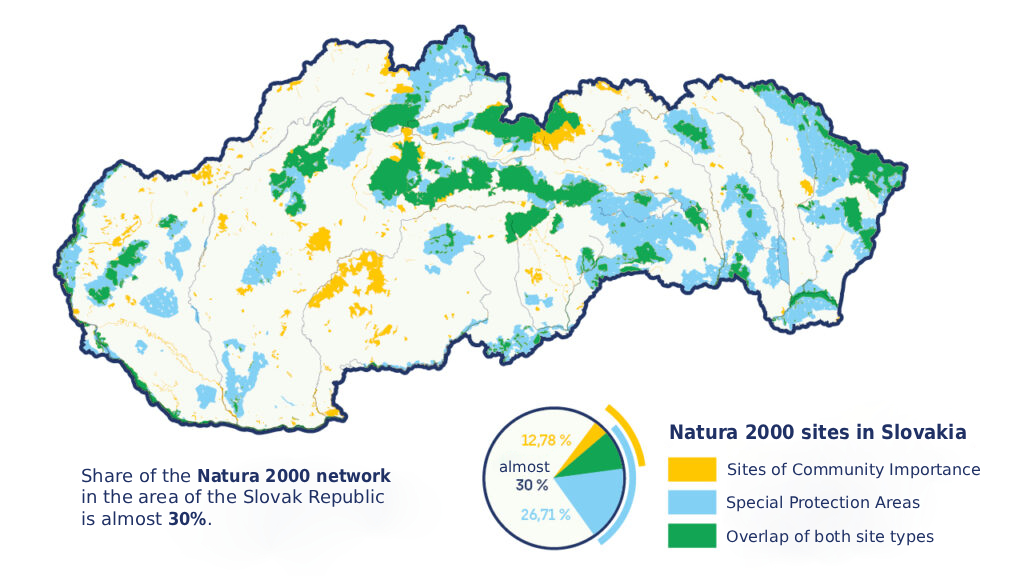
Project objectives related to the protection of Slovak Natura 2000 sites:
- Ensure endangered species are monitored using reliable data sources.
- Assess the impact of climate change on the Natura 2000 network.
- Protect habitats and peatlands by establishing management centers.
- Develop and evaluate agroforestry systems that support endangered species and habitat types.
- Restore habitats and create conditions for highly endangered species such as the Western Capercaillie (Tetrao urogallus), Carpathian beetle (Pseudogaurotina excellens), leafless bastard-toadflax (Thesium ebracteatum), European pond turtle (Emys orbicularis), four-leaved water fern (Marsilea quadrifolia), and dozens of others.
- Evaluate the effectiveness of restoration and conservation measures, drawing lessons from five pilot sites.
- Assess the socio-economic benefits and ecosystem services provided by the Natura 2000 network.
- Raise awareness of Natura 2000 among both experts and the general public.